ReadNovaX Blog
What Is a Novel? Meaning, Structure, Types & Examples Explained
Confused about what a novel actually is? Learn the meaning of a novel, its structure, common types, word count, and how novels differ from short stories and graphic novels.
By ReadNovaX Team · Published 14 Jul 2026 · Last Updated 26 Jul 2026 · 22 min read
What Is a Novel? Meaning, Structure, Types, and Examples
Most readers use the word "novel" every day without ever pinning down what it actually means. Is a 40,000-word book still a novel? Is a graphic novel really a novel at all? Where do web novels and light novels fit in? This guide answers all of it — clearly, with real examples, and without the academic jargon that makes most definitions harder to understand than the books themselves.
Quick Answer A novel is a long, fictional prose narrative — typically 50,000 to 110,000 words — built around characters, conflict, and a connected sequence of events told across multiple chapters. Unlike a short story, which usually captures a single moment or idea, a novel has room to develop plot, subplots, and character growth over an extended arc. The word comes from the Italian novella, meaning "a new little thing," a nod to how the form was once seen as fresh, everyday storytelling rather than formal poetry or scripture. |
Table of Contents
1. What Is a Novel? A Clear Definition
2. Novel Meaning: Where the Word Comes From
3. Novel vs Short Story, Novella, and Graphic Novel
4. A Brief History of the Novel: From Manuscripts to Web Fiction
5. The Anatomy of a Novel: Acts, Chapters, and Scenes
6. Novel Structure: Plot, Pacing, Character Arcs, and Subplots
7. Types of Novels: Traditional Genres
8. Modern and Digital Novel Formats
9. How Long Is a Novel? Word Count by Genre
10. How to Write a Novel: From Idea to Publication
11. Real-World Examples of Novels
12. Common Myths and Misconceptions About Novels
13. Beginner Reading Path and Writing Roadmap
14. Key Takeaways
15. Frequently Asked Questions
1. What Is a Novel? A Clear Definition
A novel is a book-length work of fiction written in prose — ordinary, sentence-and-paragraph writing rather than verse — that tells a connected story through characters, setting, and conflict. It's long enough to be divided into chapters and complete enough to stand as one continuous reading experience, usually somewhere between 50,000 and 110,000 words.
That length is what separates a novel from a short story or a novella, but word count alone doesn't make a novel. What actually defines the form is scope: a novel has enough space to follow a character (or several) through a real change, built from cause-and-effect events rather than a single scene or moment.
Core Elements That Make a Story a Novel
- Prose form — written in continuous sentences and paragraphs, not poetry or a script
- Sustained length — long enough to be broken into chapters, typically 50,000+ words
- A unified plot — a chain of connected events with cause and effect, not a series of unrelated scenes
- Character development — at least one character who changes, learns, or is tested over the course of the story
- Structure — a recognizable beginning, middle, and end, even in experimental or nonlinear novels
- Conflict — an internal or external problem driving the character forward
- Setting and worldbuilding — a time and place detailed enough to feel real, whether it's Victorian London or an invented kingdom
Definitions of "novel" vary slightly across dictionaries and literary organizations, and that's normal — the form has never had one fixed rulebook. What every workable definition agrees on, though, is scale and intention: a novel is meant to hold a reader's attention across an extended, connected experience, not a single sitting. That's true whether it's a 400-page literary classic printed on paper or a web novel released in 200 short chapters over two years.
It's also worth separating the novel from its neighbors in fiction. A short story and a novel might share the same theme or even the same character, but they're built for different jobs — a short story delivers one sharp effect, while a novel earns a slower, cumulative one. Understanding that distinction is the fastest way to stop confusing length with quality; a novel isn't "better" than a short story, it's simply doing something structurally different.
Quick Answer: Novel Definition in One Line A novel is a long fictional story, written in prose and told across chapters, that follows characters through a connected sequence of conflict-driven events toward some kind of resolution. |
2. Novel Meaning: Where the Word Comes From
The word "novel" comes from the Italian novella ("new") by way of the French nouvelle. In 14th-century Italy, novella described a short prose tale about everyday life — something "new" and grounded, in contrast to the grand, formal verse of epic poetry or the sacred weight of religious writing. Giovanni Boccaccio's Decameron (1353), a collection of short prose tales, is often cited as an early ancestor of the form.
By the time the word reached English in the late 16th century, "novel" described any short prose tale of romance or adventure. It wasn't until the 18th century, as English writers began producing longer, more structurally ambitious prose fiction, that "novel" settled into the meaning we use today: a long, fictional prose narrative rather than a short one.
Why this matters: the novel was never meant to feel formal. Its whole identity was built on being accessible, contemporary storytelling for ordinary readers — which is exactly why the form keeps reinventing itself, from serialized Victorian magazine fiction to today's chapter-by-chapter web novels.
This is also why arguments over whether something "counts" as a real novel tend to miss the point. The earliest Italian novelle were considered minor entertainment compared to poetry and scripture, yet they eventually grew into the dominant literary form of the last three centuries. Every generation's "lesser" fiction — serialized magazine stories in the 1800s, pulp paperbacks in the 1950s, and web novels today — has followed roughly the same pattern: dismissed as unserious at first, then absorbed into the mainstream once enough readers proved they wanted more of it.
3. Novel vs Short Story, Novella, and Graphic Novel
These four terms get mixed up constantly, and the differences aren't always about length. Here's how each one actually compares.
Novel vs Short Story
Feature | Novel | Short Story |
|---|---|---|
Word count | 50,000 – 110,000+ words | Under 7,500 words (typically 1,000–7,000) |
Scope | Multiple events, often multiple characters or subplots | One event, moment, or turning point |
Characters | Full development across the story | Limited development; often just enough to serve the moment |
Plot complexity | Main plot plus subplots and secondary conflicts | Single, focused conflict |
Reading time | Several hours to several days | 10–40 minutes |
Purpose | To immerse readers in a full journey | To deliver one sharp, complete impression |
Novel vs Novella
Feature | Novel | Novella |
|---|---|---|
Word count | 50,000 – 110,000+ words | 17,500 – 40,000 words |
Complexity | Multiple subplots and a full cast | One central plot, a small cast, minimal subplots |
Pacing | Room for slow build and digression | Tight and fast; little room for detours |
Common use | Standard commercial and literary publishing | Literary prizes, digital-first releases, in-between projects |
Novel vs Graphic Novel
Feature | Novel | Graphic Novel |
|---|---|---|
Medium | Prose — words carry the entire story | Sequential art — illustrations and text work together |
Word count | 50,000 – 110,000+ words of prose | Much lower word count; story is carried visually |
Format | Continuous chapters | Panels, pages, and visual pacing |
Visual role | None — imagery exists only in the reader's mind | Central — art conveys tone, action, and emotion directly |
So is a graphic novel really a "novel"?
Technically, no — a graphic novel is a long-form comic, not a prose narrative. The word "novel" was borrowed for marketing and shelving purposes in the 1970s to signal book-length, serious storytelling. It shares scope and structure with novels, but the storytelling medium is fundamentally different.4. A Brief History of the Novel: From Manuscripts to Web Fiction
Long-form fiction is old, but the novel as we understand it — a sustained, structured prose narrative meant to be read privately, cover to cover — developed gradually across centuries and continents.

11th Century: An Early Contender for "First Novel"
Murasaki Shikibu's The Tale of Genji, written in 11th-century Japan, is frequently cited by literary scholars as one of the earliest works that behaves like a modern novel — psychologically complex characters, a sustained plot, and a structure built for private reading rather than public performance.
1605: Don Quixote and the "Modern" European Novel
Miguel de Cervantes's Don Quixote is widely credited as the first modern European novel. It combined satire, realism, and a self-aware narrator in a way that broke from the romantic epics that came before it, and it directly influenced centuries of prose fiction that followed.
18th Century: The English Novel Takes Shape
Writers like Daniel Defoe (Robinson Crusoe, 1719) and Samuel Richardson (Pamela, 1740) helped standardize the long-form prose narrative in English, often built around a single protagonist's first-person or letter-based account of events.
19th Century: The Golden Age and the Birth of Serialization
This is the century of Jane Austen, Charles Dickens, Leo Tolstoy, and Fyodor Dostoevsky. It's also the century where serialization became mainstream — Dickens published many of his novels chapter by chapter in magazines, with readers waiting for the next installment the same way modern readers wait for the next chapter of a web novel.
20th Century: Modernism and the Genre Boom
Writers like Virginia Woolf and James Joyce experimented with structure and interior narration, while the mass-market paperback boom made genre fiction — mystery, romance, science fiction, fantasy — widely available and commercially dominant for the first time.
Late 20th Century: The Indian English Novel Comes of Age
Writers such as R.K. Narayan brought Indian settings and everyday life into English-language fiction with wide international readership, and Salman Rushdie's Midnight's Children (1981) helped establish postcolonial Indian fiction as a major global literary force.
21st Century: Digital and Serialized Fiction
Ebooks, self-publishing, and serialized platforms have reshaped how novels are written, released, and read. Chapter-by-chapter web novels — often published and updated in real time, with direct reader feedback shaping the story — are now one of the fastest-growing forms of fiction worldwide, especially in genres like progression fantasy, LitRPG, and romance.
What makes this era genuinely different from earlier serialization isn't the chapter-by-chapter format itself — Dickens already proved that works — it's the speed and directness of the feedback loop. A 19th-century novelist might wait weeks to hear whether readers liked a magazine installment, largely through sales figures and letters. A web novelist today can see chapter-by-chapter engagement within hours, and many actively adjust pacing, expand fan-favorite characters, or resolve plot threads faster based on that response. It's the same core relationship between writer and reader that has always driven serialized fiction — just compressed from weeks into hours.
Quick Answer: Is Serialized Fiction Really a Novel? Yes. A serialized or web novel is still a novel — it's simply released and read in chapter installments rather than as one finished book. The format goes back to Dickens; only the delivery method (a screen instead of a magazine) has changed. |
5. The Anatomy of a Novel: Acts, Chapters, and Scenes
A novel isn't one giant block of text — it's built in layers, each one nested inside the next. Understanding this structure makes both reading and writing novels much easier.
- Novel — the complete work, usually organized around one central conflict or question.
- Act — a major structural movement (commonly three: setup, confrontation, resolution) marking a shift in the story's direction.
- Chapter — a grouping of one or more scenes, usually built around a specific goal, event, or turning point.
- Scene — the smallest structural unit: a character with a goal, an obstacle, and an outcome that changes something.
A well-built scene almost always ends in one of two ways: the character gets what they wanted (and a new problem appears), or they don't get it (and have to adapt). String enough of these scenes together with rising stakes, and you get a chapter. String enough chapters together, and you get an act. String three acts together, and you have a novel.
6. Novel Structure: Plot, Pacing, Character Arcs, and Subplots
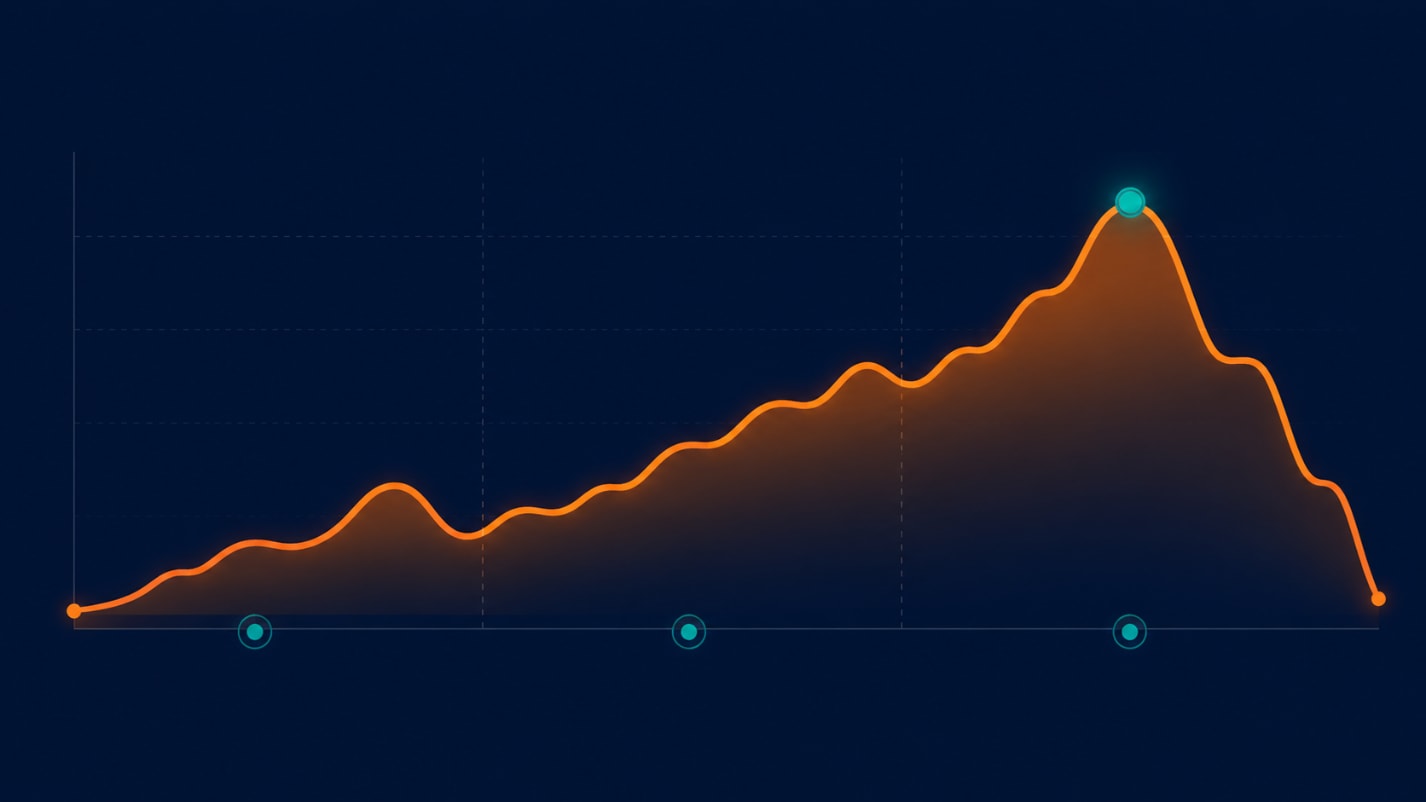
The Three-Act Structure
Most novels — genre and literary alike — follow some version of a three-act structure, even when the chapters aren't explicitly labeled that way.
Act | Approx. % of Novel | What Happens |
|---|---|---|
Act One — Setup | First 25% | Introduce the protagonist, world, and normal life; a disruption forces them into the story's central conflict |
Act Two — Confrontation | Middle 50% | Rising stakes, obstacles, subplots, and a midpoint twist that raises the pressure further |
Act Three — Resolution | Final 25% | The climax, the character's final test, and the fallout that resolves the central conflict |
Pacing: Why Some Novels Feel Fast and Others Feel Slow
Pacing is controlled by two things: how much happens, and how much page space it's given. A novel that spends three pages on a single tense conversation and then summarizes six months in one paragraph is intentionally speeding up and slowing down — that contrast is what keeps readers engaged. Chapter endings that pose a new question (a "hook") are one of the most reliable pacing tools novelists use to keep readers turning pages, which is also why they're so central to serialized and web fiction, where a strong chapter-ending hook directly affects whether a reader comes back for the next release.
Character Arcs
A character arc is the internal change a character goes through across the story. There are three common types:
- Positive arc — the character overcomes a flaw or false belief and grows (the most common arc in fiction)
- Negative arc — the character is consumed by a flaw instead of overcoming it, often ending in tragedy or moral decline
- Flat arc — the character doesn't change, but instead changes the world or people around them by holding firm to their values
Subplots
A subplot is a secondary storyline running alongside the main plot — a romance, a rivalry, a mystery, a family conflict. Good subplots aren't filler; they usually mirror, complicate, or put pressure on the main plot, and they give a novel room to breathe between major main-plot beats.
A useful test for whether a subplot is earning its place: remove it and ask what the novel loses. A strong subplot changes how the reader understands the main character, raises the stakes of the main conflict, or pays off in a way that connects back to the ending. A weak subplot can be cut entirely without the main story losing any meaning — which is usually a sign it should have been trimmed or removed in revision.
Quick Answer: What Is Novel Structure? Novel structure refers to how a story's events are organized — most commonly into a three-act pattern of setup, rising conflict, and resolution — built from individual scenes and chapters that escalate tension toward a climax. |
7. Types of Novels: Traditional Genres
"Novel" describes a form, not a genre — the same way "song" doesn't tell you if something is jazz or pop. Here are the genres readers encounter most often.
- Literary fiction — prioritizes character depth, theme, and prose style over plot mechanics; often explores the human condition without a strict genre formula
- Mystery / thriller — built around a central question (who did it? what's the threat?) with clues, suspects, and escalating danger
- Romance — centers on the emotional development of a relationship, typically with an optimistic or satisfying ending
- Science fiction — explores technology, future societies, or scientific concepts and their impact on characters and civilization
- Fantasy — set in a world with magic or supernatural elements, ranging from epic multi-book sagas to lighter, character-focused stories
- Historical fiction — set in a real past era, blending accurate historical detail with invented characters and plot
- Horror — designed to provoke fear or dread, often using the supernatural, psychological tension, or body horror
- Coming-of-age (bildungsroman) — follows a young protagonist's growth into maturity, often centered on identity and self-discovery
- Dystopian — set in a flawed, often oppressive future society, frequently used to comment on present-day issues
- Crime — focuses on criminal acts and their investigation or consequences, often from the perspective of police, criminals, or both
- Adventure — driven by physical action, exploration, and external stakes, with pacing built around momentum
8. Modern and Digital Novel Formats
Alongside traditional print genres, several formats have grown specifically around digital reading habits — and they've become some of the fastest-growing corners of fiction.
Web Novels
Web novels are released chapter by chapter directly to readers online, often while the author is still writing later chapters. This format allows near-real-time reader feedback to shape pacing, character popularity, and even plot direction — something a traditionally published novel, finished long before release, can't offer. Genres like progression fantasy and LitRPG (stories built around game-like leveling and skill systems) have grown almost entirely through this format, on platforms including ReadNovaX.
Light Novels
Light novels originated in Japan and are typically shorter, dialogue-heavy prose works aimed at young adult and teen readers, often released in numbered volumes and paired with illustrated cover art or interior art. Many popular anime and manga series began as light novels.
Graphic Novels
As covered above, graphic novels tell a complete, book-length story primarily through sequential art rather than prose — closer to a long-form comic than a traditional novel, though they share similar scope and narrative ambition.
Visual Novels
Visual novels are an interactive digital format — closer to a game than a book — that combines static or animated art, text, and often voice acting, with the reader making choices that can branch the story toward different outcomes and endings.
Interactive and Gamebook Novels
This format gives readers direct control over the plot through branching choices, most famously in the "Choose Your Own Adventure" style. Instead of one fixed narrative, the reader assembles their own path through pre-written branches.
These formats aren't competing replacements for the traditional novel — they're parallel branches that grew to fit different reading habits, screen sizes, and attention spans. A reader might finish a 300-page literary novel on a weekend flight and then spend the next three months following a web novel one chapter a day, and both are legitimate, complete reading experiences of long-form fiction.
Quick Answer: What Is a Web Novel? A web novel is a novel published online in chapter installments, often while it's still being written, allowing readers to follow the story in near real time and give feedback that can shape future chapters. |
9. How Long Is a Novel? Word Count by Genre
There's no single official word count for a novel — expectations shift by genre, audience, and market. Here's a practical benchmark table.
Genre / Category | Typical Word Count |
|---|---|
Literary fiction | 80,000 – 100,000 words |
Mystery / thriller | 70,000 – 90,000 words |
Romance | 70,000 – 90,000 words |
Fantasy / science fiction | 90,000 – 120,000 words |
Young adult (YA) | 50,000 – 80,000 words |
Middle grade | 30,000 – 55,000 words |
Horror | 60,000 – 90,000 words |
Historical fiction | 90,000 – 120,000 words |
Novella (adjacent, not a full novel) | 17,500 – 40,000 words |
Web novel (total, across all chapters) | 100,000 – 500,000+ words |
Note on web novels: because they're released and often written in ongoing chapters rather than finished as one manuscript, total web novel length varies enormously — many run well past traditional print-novel length by the time they conclude.
10. How to Write a Novel: From Idea to Publication
Every novelist's process looks a little different, but most published novels pass through the same broad stages. None of these steps are strictly linear in practice — most writers loop back to revise character notes mid-draft, or rework an outline after discovering a better idea halfway through — but treating them as a rough sequence is still the most reliable way to move a story from a vague idea to a finished, readable novel.
- Develop your idea and premise — narrow a broad concept down to a specific character, conflict, and stakes before you start writing.
- Decide how much to outline — some writers plan chapter by chapter ("plotters"); others discover the story while drafting ("pantsers"); most land somewhere in between.
- Build your characters and world — even a light outline benefits from knowing your protagonist's goal, flaw, and what's standing in their way.
- Write the first draft — the goal here is a complete draft, not a perfect one; momentum matters more than polish.
- Revise structurally — check pacing, plot holes, and character consistency before touching line-level prose.
- Get feedback from beta readers — outside readers catch confusion and pacing issues the writer is often too close to see.
- Line-edit and proofread — or work with a professional editor for sentence-level clarity, grammar, and style.
- Choose your publishing path — traditional publishing (via literary agents), self-publishing, or serialized publishing on a platform like ReadNovaX, which lets you build an audience chapter by chapter as you write.
- Prepare formatting and cover design — professional presentation matters for both print and digital editions.
- Plan your release and reach readers — whether that's a single launch day or an ongoing chapter release schedule, consistency is what builds a readership.
If you're choosing between publishing paths, it helps to think about what you want first: a traditional deal offers wide print distribution and an advance but usually takes years from finished manuscript to bookshelf; self-publishing gives you full control and faster timelines but requires you to manage editing, design, and marketing yourself; and serialized publishing lets you start building an audience from chapter one, while the story is still being written, which is why it's become such a common starting point for new genre novelists.
11. Real-World Examples of Novels
Classic Novels
- Pride and Prejudice by Jane Austen — a character-driven novel of manners built around wit, social pressure, and a slow-burn romance
- Don Quixote by Miguel de Cervantes — often cited as the first modern European novel, blending satire and adventure
- War and Peace by Leo Tolstoy — an epic-scale novel following multiple families across a national conflict
Modern Novels
- The Kite Runner by Khaled Hosseini — a character-focused novel exploring guilt, friendship, and redemption across decades
- The Harry Potter series by J.K. Rowling — a genre-defining fantasy series built on a clear coming-of-age arc across multiple books
Indian Novels
- Works by R.K. Narayan — known for grounding everyday Indian life and small-town settings in accessible, character-driven fiction
- Midnight's Children by Salman Rushdie — a landmark postcolonial Indian novel blending historical events with magical realism
- The White Tiger by Aravind Adiga — a modern Indian novel told through a sharp, first-person voice examining class and ambition
Web and Serialized Fiction
Web novels have produced their own breakout titles and reader communities entirely outside traditional publishing — stories in genres like progression fantasy and LitRPG have built massive followings through chapter-by-chapter releases on serialized platforms, proving that the format can support the same scope and ambition as a traditionally published novel, just delivered differently.
12. Common Myths and Misconceptions About Novels
- Myth: A novel must be at least 100,000 words. Reality: genre and audience expectations vary widely — a YA novel at 60,000 words is completely standard.
- Myth: Outlining kills creativity. Reality: outlining and discovery writing are just two different tools; many successful novelists use a blend of both.
- Myth: You need a literary agent to succeed as a novelist today. Reality: self-publishing and serialized platforms have created legitimate, financially viable paths outside traditional publishing.
- Myth: Genre fiction isn't "real" literature. Reality: genre and literary fiction are marketing categories, not quality judgments — plenty of genre novels are studied and praised for craft.
- Myth: A first draft has to be good. Reality: first drafts exist to be revised; most professional novelists describe their early drafts as rough by design.
- Myth: Novels can't be episodic or serialized. Reality: serialization is one of the oldest novel-publishing traditions, dating back to 19th-century magazine fiction.
13. Beginner Reading Path and Writing Roadmap
A Reading Path for New Novel Readers
- Start with a shorter, plot-driven novel in a genre you already enjoy on screen or TV — it builds reading momentum fast
- Move to one classic novel with a strong, clear plot before tackling denser literary classics
- Explore two or three genres you haven't tried, to find what pacing and tone you personally enjoy most
- Try a web novel or serialized story for a lower-commitment, chapter-by-chapter reading habit
- For a curated starting list, see ReadNovaX's guide: Best Novels for Beginners to Read
A Writing Roadmap for First-Time Novelists
- Learn the basics of story structure before drafting — see: How to Outline Your First Novel
- Build one well-developed protagonist before worrying about a full cast — see: Character Development Guide for New Writers
- Draft a strong opening chapter, since it does the most work in hooking readers and, on serialized platforms, in earning a second chapter read — see: How to Write a Strong First Chapter
- If you're drawn to game-like fantasy fiction, explore the format's specific conventions — see: Beginner's Guide to Progression Fantasy and LitRPG
- Once a draft is ready, learn to summarize it effectively for readers, agents, or platform pages — see: How to Write a Novel Synopsis That Sells
- Decide how you want to publish — see: Web Novel vs Traditional Publishing: Which Path Fits You?
14. Key Takeaways
- A novel is a long, fictional prose narrative — usually 50,000–110,000+ words — told across chapters with a connected plot and developed characters
- The word "novel" comes from the Italian novella, meaning "a new little thing"
- Novels differ from short stories (much shorter, single-moment focus) and novellas (mid-length, single plotline)
- Graphic novels are visual storytelling, not prose, despite sharing the name
- Novel structure is typically built in layers: scenes form chapters, chapters form acts, and acts form the complete three-act structure
- Word count expectations vary significantly by genre — there's no single "correct" novel length
- Web novels, light novels, and visual novels represent legitimate modern evolutions of the form, not lesser versions of it
- Serialized, chapter-by-chapter publishing has roots going back to 19th-century magazine fiction — it isn't a new or lesser way to release a novel
Frequently Asked Questions
What is a novel in simple words?
A novel is a long made-up story written in normal prose (not poetry), usually split into chapters, that follows characters through a connected series of events.
What's the difference between plot and story in a novel?
A: "Story" refers to everything that happens, in chronological order, while "plot" refers to how those events are arranged and revealed to the reader — the same story can be told through very different plot structures.
Is self-publishing a novel legitimate?
Yes — self-publishing, including serialized publishing on dedicated fiction platforms, is a widely used and commercially viable path that many successful novelists use alongside or instead of traditional publishing.
Can short stories be turned into novels?
Yes — this is a common practice, though it typically requires expanding the plot, adding subplots, and deepening character arcs rather than simply adding more words to the original scene.
Do novels need subplots?
Not strictly, but most full-length novels include at least one subplot to add depth, pacing variety, and complexity beyond the main storyline.
What is a light novel?
A light novel is a Japanese-originated format: typically shorter, dialogue-heavy prose aimed at young adult readers, often released in volumes with illustrated art.
What makes a novel "literary" versus "commercial"?
Literary fiction generally prioritizes prose style, theme, and character depth, while commercial fiction prioritizes plot, pacing, and genre conventions — though many novels blend both.
Are graphic novels considered novels?
Not in the strict, technical sense — a graphic novel tells its story primarily through art, not prose, though it shares a similar length and narrative ambition with traditional novels.