ReadNovaX Blog
Novel vs Short Story: Key Differences in Length, Structure & Writing Guide
Novel or short story—which format best fits your idea? Discover the key differences in length, structure, pacing, characters, and writing style to choose the right storytelling format with confidence.
By ReadNovaX Team · Published 21 Jul 2026 · Last Updated 26 Jul 2026 · 25 min read
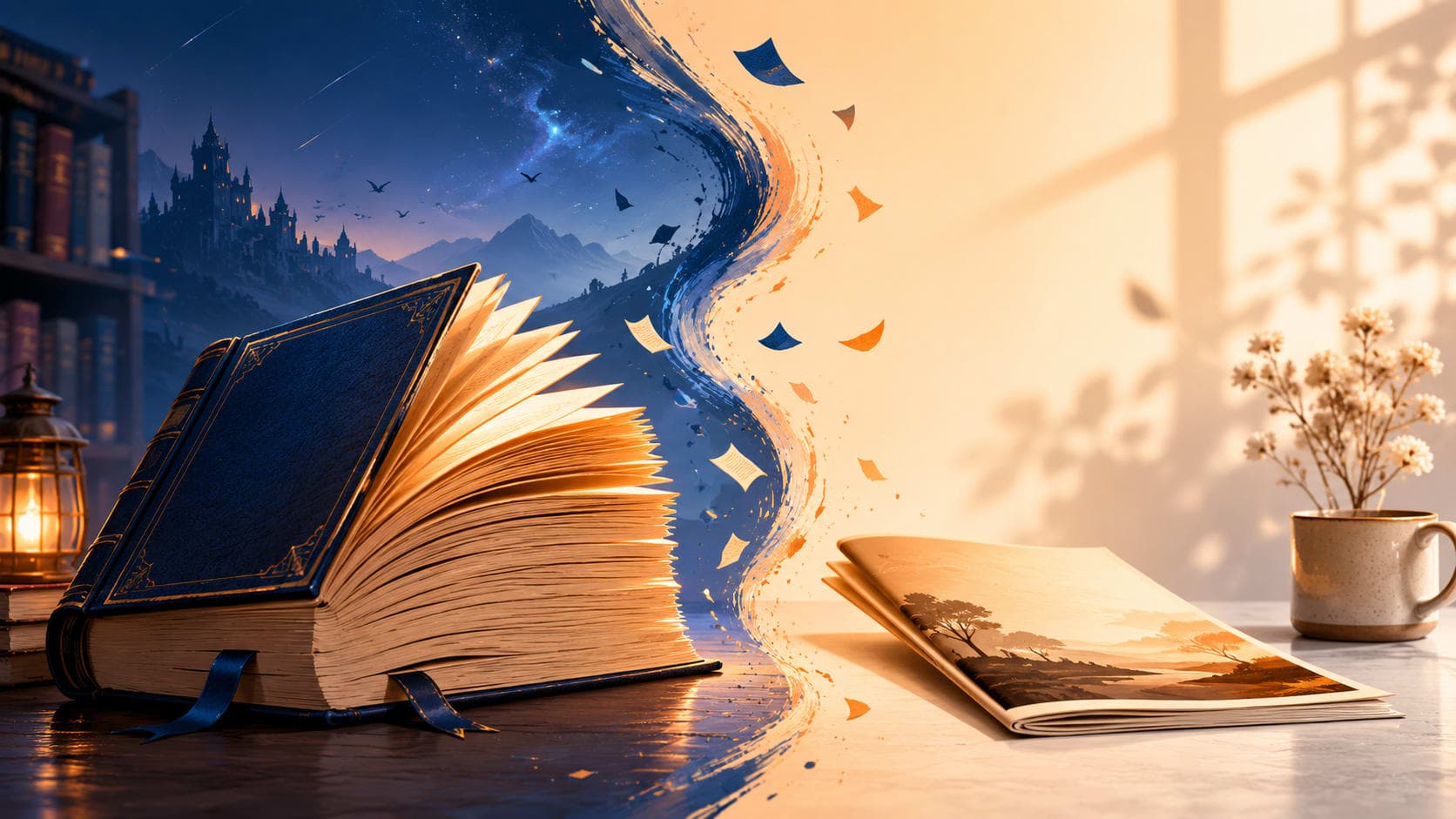
Novel vs Short Story: What's the Difference for Writers and Readers?
You sit down with a new idea. A character whispers in your ear. A scene flickers behind your eyes. You open your laptop, ready to write—and then you freeze.
Should this become a novel or a short story?
It sounds like a simple question, but choosing the wrong format is one of the fastest ways to kill a promising piece of fiction. Writers who force a small idea into a novel often end up with 40,000 words of padding and a manuscript that never feels finished. Others who cram an epic concept into a short story produce something rushed, confusing, and emotionally hollow.
This guide exists to stop that from happening. Whether you are a beginner wondering where to start, a fiction reader curious about how stories work, or an aspiring author deciding what to write next, you will leave here knowing exactly how to match your idea to the right format.
We will cover length, structure, character development, pacing, world building, reader experience, and the practical realities of writing each format. You will also get a clear decision framework you can use every time a new idea shows up.
What Is a Novel?
A novel is a long-form work of fiction, typically divided into chapters, that explores a complex narrative through multiple characters, subplots, and evolving conflicts. It is the most common format for commercial fiction and remains the dominant medium for immersive storytelling across print and digital platforms.
The purpose of a novel is depth. It gives you space to build a protagonist who changes over time, to weave secondary characters into the main thread, and to construct a world that feels lived-in. Novels allow for slow-burn tension, multiple climaxes, and resolutions that echo across hundreds of pages.
Most novels fall between 50,000 and 100,000 words, though genre expectations vary. Fantasy and science fiction novels often stretch past 100,000 words because they require extensive world building. Romance and thriller novels frequently sit tighter, around 70,000 to 85,000 words. A manuscript below 50,000 words is generally considered a novella, not a full novel.
Chapters are the structural backbone of a novel. They create natural stopping points for readers, control pacing, and allow the writer to shift point of view or move between timelines. A well-structured novel uses chapters to manage reader engagement, ending some on cliffhangers and others on quiet emotional beats.
Character depth is where novels truly shine. You have room for a full character arc—flawed beginning, tested middle, transformed ending. Relationships can develop gradually. Backstory can be revealed in layers. The reader invests emotionally because they have spent significant time with these people.
World building in a novel does not have to be elaborate, but it has room to breathe. Whether you are writing contemporary literary fiction set in a small town or an epic fantasy spanning multiple kingdoms, the novel format lets you establish setting, culture, history, and atmosphere without rushing.
Examples help clarify. Pride and Prejudice by Jane Austen is a novel not because it is long, but because it tracks multiple relationships, social dynamics, and personal transformations across a broad canvas. The Name of the Wind by Patrick Rothfuss uses the novel format to layer mythology, magic systems, and a nonlinear life story. Both works would collapse if compressed into short fiction.
For writers, the novel offers the ultimate creative playground. It also demands the ultimate commitment.
What Is a Short Story?
A short story is a focused work of fiction that centers on a single conflict, a limited cast of characters, and one meaningful narrative arc. It delivers its emotional payload quickly and leaves the reader with a concentrated impression rather than a sprawling experience.
The purpose of a short story is precision. Every sentence must earn its place. There is no room for subplots that wander away from the central tension, no space for characters who do not directly serve the narrative, and no forgiveness for a slow opening. A short story is a knife, not a tapestry.
Short stories typically range from 1,000 to 7,500 words. Flash fiction sits below 1,000 words. A novelette bridges the gap between short story and novella at roughly 7,500 to 17,500 words. Most literary magazines and anthologies prefer stories in the 2,000 to 5,000-word range because that length allows enough room for setup and payoff without demanding the structural complexity of longer fiction.
The short story relies on one central conflict. That conflict might be external—a man versus a storm, a woman versus a bureaucracy—or internal, such as a character facing a moral choice in a single afternoon. Whatever the shape, the story introduces the problem quickly, escalates it, and resolves it within a tight frame.
Characterization in short fiction works differently than in a novel. Instead of showing a character's full arc from flaw to growth, short stories often capture a pivotal moment that reveals who someone already is. The reader meets the character at a crossroads, watches the decision, and feels the impact. It is efficient, not shallow.
Consider Shirley Jackson's The Lottery. In under 4,000 words, Jackson builds a village, establishes a horrifying tradition, and delivers one of the most chilling endings in American literature. There are no subplots. No backstory dumps. Every detail points toward the final scene. That is the power of short fiction.
Or look at Raymond Carver's Cathedral. A man reluctantly hosts his wife's blind friend, has a transformative experience drawing a cathedral together, and the story ends. One evening. One conversation. One shift in perspective. That is all it needs.
Short stories are not novels with fewer words. They are a different species of fiction, governed by different rules and rewarding different skills.
Novel vs Short Story at a Glance
The fastest way to understand the difference is to see the formats side by side. The table below breaks down the practical distinctions writers and readers care about most.
Element | Novel | Short Story |
|---|---|---|
Typical Word Count | 50,000–100,000+ words | 1,000–7,500 words |
Average Reading Time | 6–15 hours | 10–45 minutes |
Average Writing Time | 6 months to 2+ years | A few days to 4 weeks |
Main Characters | Multiple, with full arcs | 1–3, often static or momentary |
Chapters | Yes, typically 10–50+ | Rarely; continuous or 1–3 sections |
Plot Complexity | Multiple threads, subplots, twists | Single thread, one twist or revelation |
Pacing | Slow build, sustained tension | Immediate hook, rapid escalation |
Emotional Investment | Deep, long-term attachment | Sharp, immediate impact |
World Building | Extensive and layered | Minimal, implied, or focused |
Publication Methods | Traditional publishing, self-publishing, serialized platforms | Literary magazines, anthologies, online journals |
Editing Effort | Multiple rounds, developmental and line editing | Focused polish, often fewer rounds |
Reader Commitment | High—requires sustained attention | Low—can be consumed in one sitting |
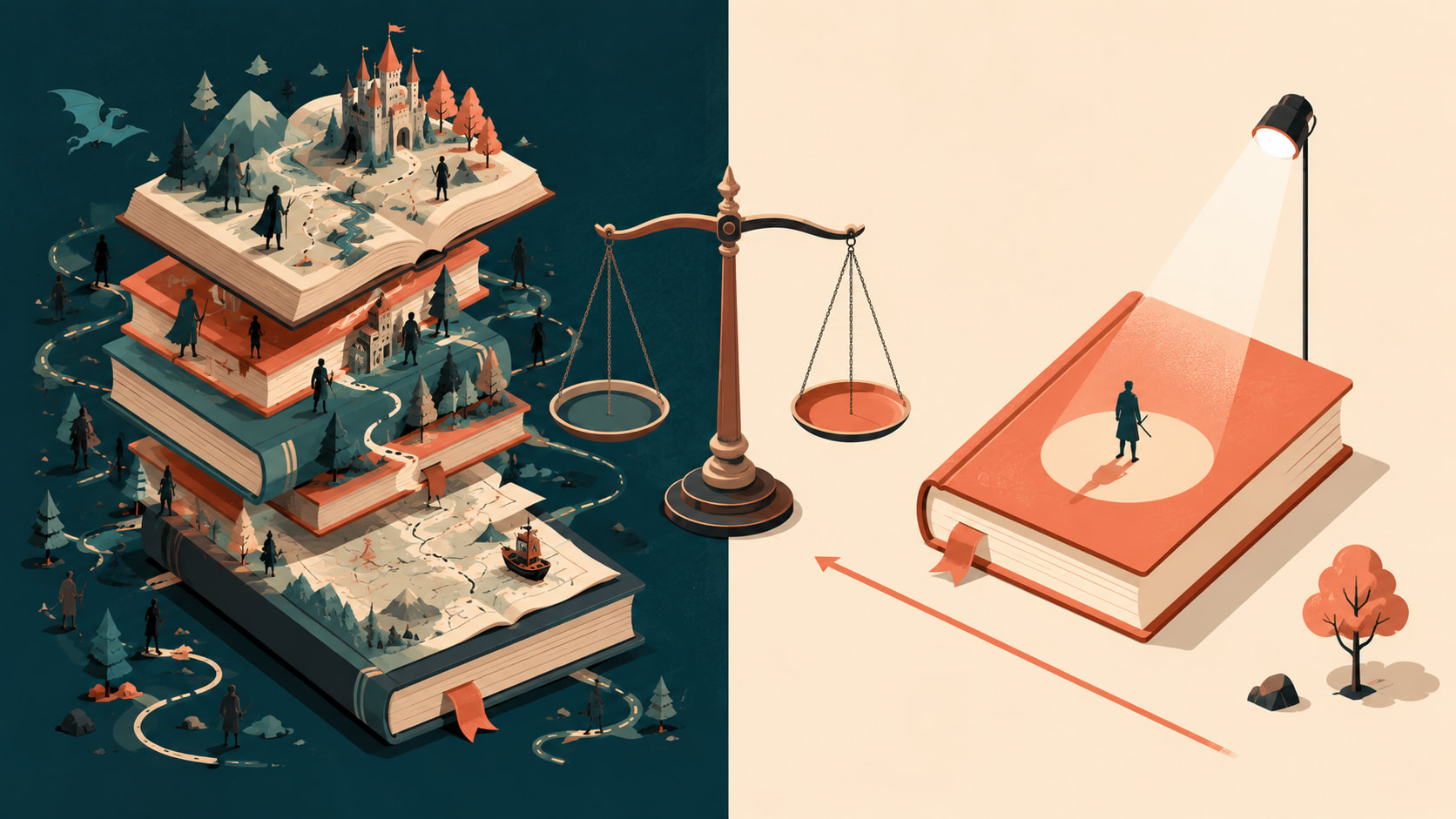
This table tells part of the story, but numbers alone do not define the formats. A 10,000-word piece is not automatically a short story, and a 60,000-word piece is not automatically a novel. What matters is narrative scope—the amount of story you are trying to tell, not the word count you use to tell it.
Length Differences: Why Word Count Is Only Half the Story
How long is a novel? Most publishers and writing organizations define a novel as any work of fiction exceeding 50,000 words. National Novel Writing Month (NaNoWriMo) uses this threshold. Commercial genres have their own expectations: romance and cozy mysteries often land between 70,000 and 85,000 words; epic fantasy regularly exceeds 120,000 words; literary fiction floats anywhere from 60,000 to 100,000 words depending on the author's style and the story's ambition.
How long is a short story? The general consensus places short stories between 1,000 and 7,500 words. Flash fiction compresses that further, sometimes telling a complete story in under 500 words. Micro fiction—stories of 100 words or fewer—exists as an extreme exercise in narrative economy.
But here is what experienced writers know: length is a symptom, not a cause. A story becomes a novel when the idea demands exploration across multiple scenes, character relationships, and thematic layers. A story remains a short story when the idea can be fully realized in a single dramatic situation.
Think of it like packing for a trip. A weekend getaway requires a backpack. A six-month expedition requires multiple suitcases. The trip itself determines the luggage. Your idea determines the format.
Some writers make the mistake of padding a short idea to novel length, adding filler scenes, redundant dialogue, and meandering descriptions. The result is a manuscript that feels thin despite its word count. Others try to compress a novel-sized concept into a short story, stripping away everything that made the idea compelling. The result is confusion.
The right question is not 'How many words should this be?' The right question is 'How much story does this idea actually contain?'
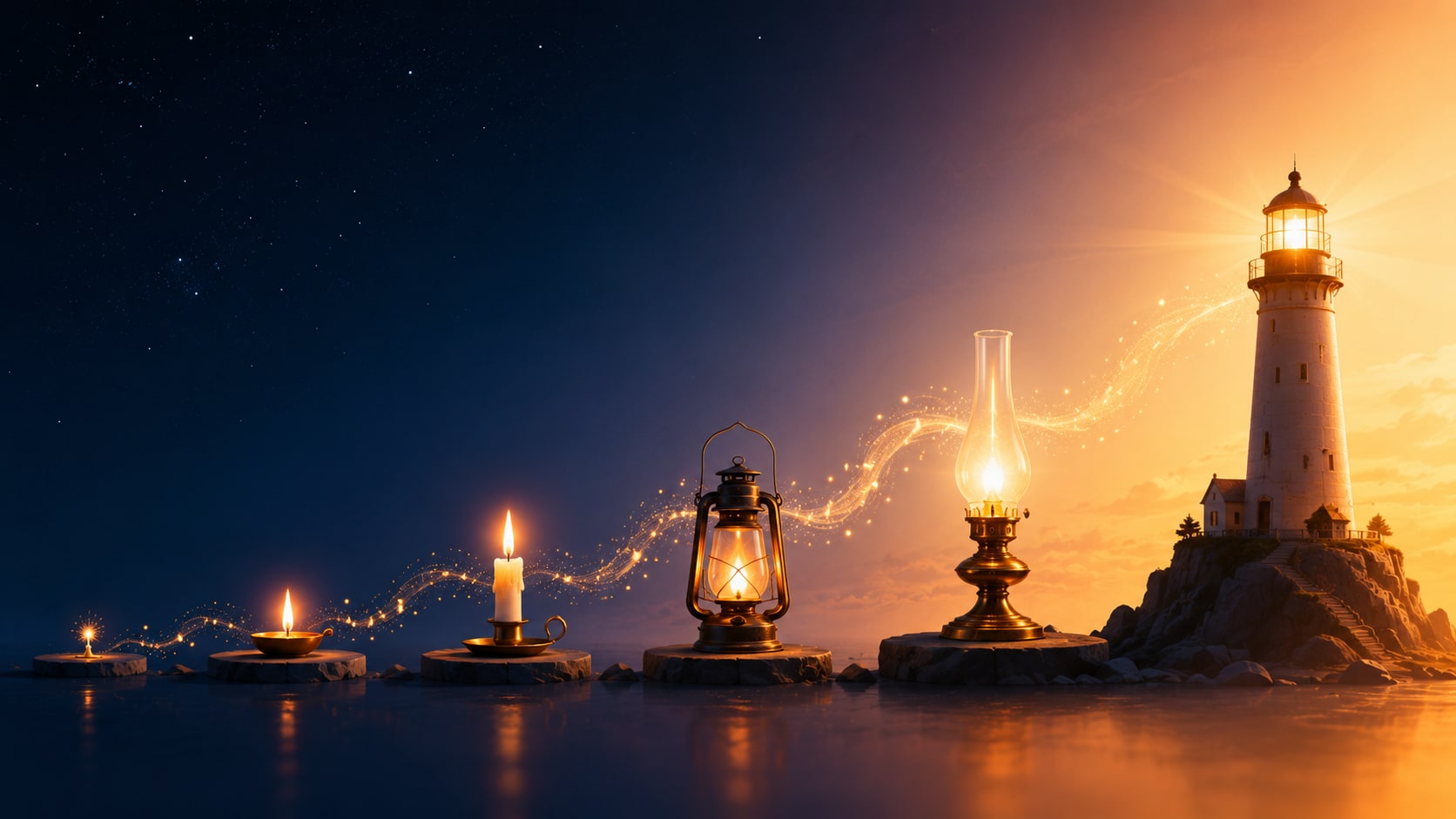
Story Structure: How Novels and Short Stories Are Built
Novels and short stories share the same DNA—both need a beginning, middle, and end—but they express that structure in fundamentally different ways.
Novel Structure
A novel typically follows a multi-act structure. The three-act model remains the most common: setup, confrontation, resolution. But within those acts, a novel layers subplots, secondary character arcs, and evolving conflicts that complicate the main thread.
In a mystery novel, the detective might be investigating a murder while simultaneously repairing a strained relationship with a partner and confronting a personal fear that connects to the case. These threads intertwine. The subplot informs the main plot. The side characters reveal something about the protagonist. The structure is orchestral, with multiple instruments playing related melodies.
Novels also allow for structural experimentation that would not work in shorter fiction. You can alternate timelines, shift point of view between chapters, or include documents, letters, and diary entries. The length justifies the complexity.
Short Story Structure
A short story is closer to a single song than a symphony. It introduces the central conflict quickly—often within the first paragraph—escalates through a limited number of scenes, and arrives at a resolution that feels inevitable but not predictable.
The structure is linear and focused. If a short story includes a subplot, it is minimal and directly tied to the main tension. Side characters exist to illuminate the protagonist's situation, not to carry their own arcs. Every scene must move the story forward. There is no room for digression.
This does not mean short stories are simple. Some of the most structurally sophisticated fiction ever written is short. But the sophistication comes from compression, not expansion. The writer makes a thousand decisions about what to leave out, and the reader feels the weight of everything unsaid.
For example, a novel might spend three chapters showing a marriage falling apart. A short story might capture the exact moment one partner realizes it is over—in a single glance across a dinner table. Both can be devastating. Both use different tools.
Character Development: Depth Versus Precision
Character is where many writers first feel the real difference between these formats. A novel gives you room to grow a person. A short story gives you room to reveal a person.
In a novel, readers expect a character arc. The protagonist starts with a flaw, a desire, or a false belief. Over the course of the narrative, they are tested, they fail, they learn, and they emerge changed. This transformation requires space. You need scenes that establish the old self, scenes that challenge it, and scenes that demonstrate the new self. That is why novels thrive on relationships—the protagonist's mother, rival, love interest, or mentor all serve as mirrors that reflect different facets of the main character's growth.
Consider how much Elizabeth Bennet changes in Pride and Prejudice. She begins with prejudice against Mr. Darcy, shaped by her own pride and her family's behavior. Through multiple social encounters, letters, confrontations, and revelations, she recognizes her own errors. That arc needs room. A short story could show Elizabeth at one ball, making one wrong judgment, but it could not track her full transformation.
Short stories handle character differently. Because you do not have space for a full arc, you often capture a character at a decisive moment that reveals their essential nature. The reader does not watch them change over time; the reader watches them choose, and that choice tells us everything we need to know.
In Tobias Wolff's Bullet in the Brain, the protagonist is a jaded book critic who cannot stop himself from making a sarcastic comment during a bank robbery. The story does not show him reforming. It shows us, through a final memory flash, who he used to be and who he became. The contrast is the entire point. One moment. One bullet. A whole life implied.
Both approaches are valid. Neither is inferior. But they require different skills. Novel writers must sustain consistency across hundreds of pages. Short story writers must make every gesture count.
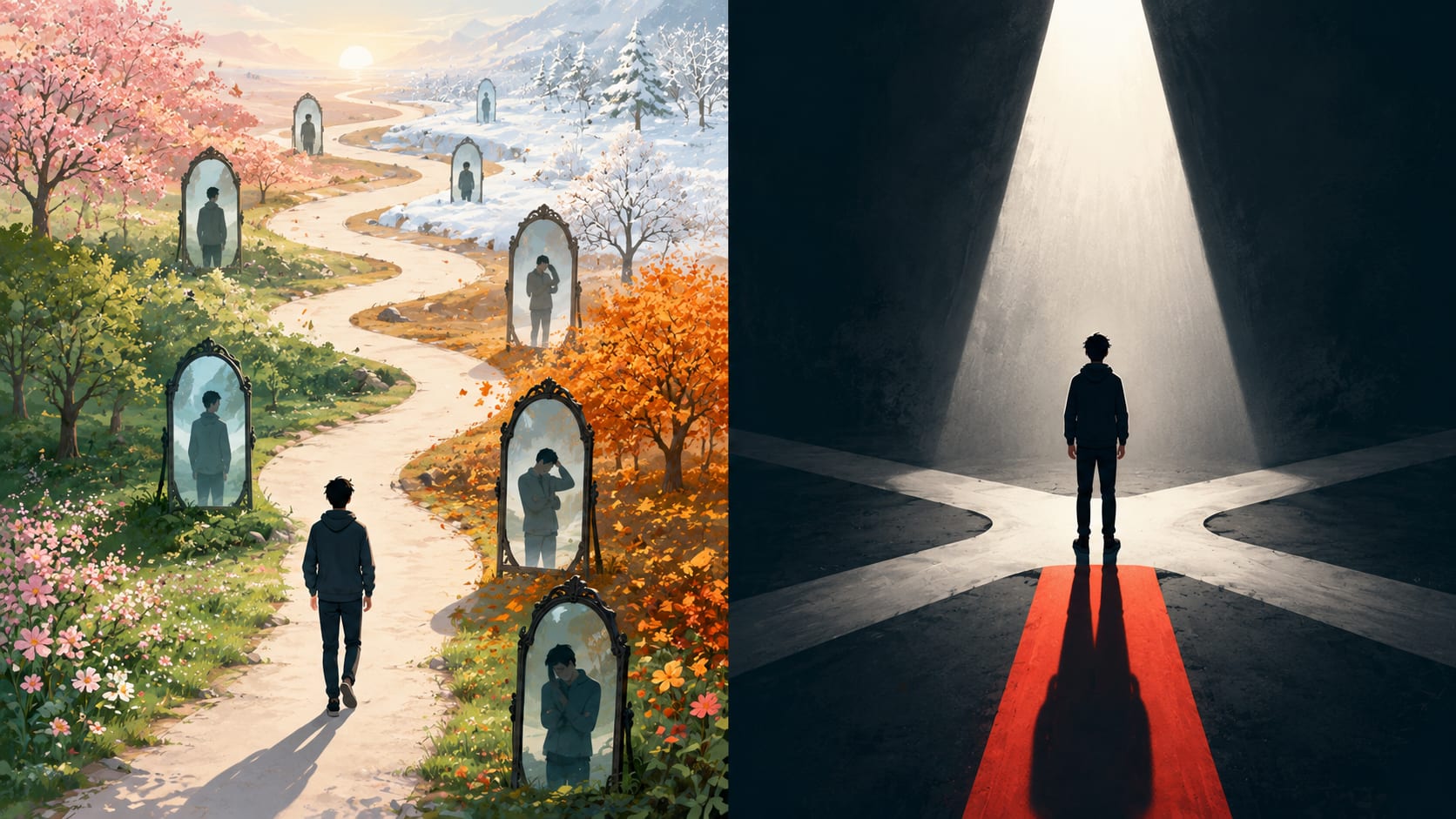
Pacing: The Rhythm of Long and Short Fiction
Pacing is the speed at which a story moves, and it is one of the most common places where writers stumble when switching between formats.
A novel paces like a long road trip. You have time for scenic detours, quiet conversations, and stretches where nothing explosive happens but tension builds underneath. The reader settles in. They accept that the first hundred pages might be setup because they trust the writer is laying groundwork for a payoff that requires patience.
Novel pacing uses multiple climaxes. Each act has its own peak. Each subplot has its own resolution. The overall arc rises and falls like a mountain range rather than a single spike. This is why novels can sustain reader engagement over days or weeks of reading. The rhythm varies. Some chapters race. Others breathe.
A short story paces like a sprint. You need an immediate hook—something that grabs attention in the first sentence or paragraph. The escalation happens fast. The conflict intensifies with each paragraph. The resolution arrives before the reader has time to check their phone.
This does not mean short stories cannot be quiet or contemplative. Alice Munro's short fiction often moves slowly, but even her quietest stories contain a sense of forward momentum. The reader feels that something is happening, even if the action is internal.
The key difference is tolerance for delay. Novel readers accept delay as part of the contract. Short story readers do not. If your short story opens with three paragraphs of weather description, you have probably already lost them.
For writers, this means novels reward patience and long-term planning. Short stories reward ruthlessness. If a sentence does not move the story forward or deepen the emotional stakes, cut it.
World Building: When Your Setting Becomes a Character
World building is the creation of the fictional environment—physical, cultural, historical, and social—in which your story takes place. The amount of world building your story needs is one of the strongest indicators of whether it should be a novel or a short story.
Fantasy and science fiction almost always require novels because they demand extensive world building. If you are creating a magic system, a political hierarchy, a different planet, or an alternate history, you need space to establish the rules, show how they affect daily life, and explore the consequences when those rules are broken. A short story can exist in a fantasy world, but it usually relies on familiar tropes the reader already understands. The moment you need to explain how your world works in detail, you have crossed into novel territory.
Historical fiction faces a similar challenge. If your story is set in Victorian London, you need to establish the social norms, the technology, the class dynamics, and the sensory details of the era. That takes space. A short story set in a well-known historical moment can work, but it must focus on a single event rather than the broader context.
Contemporary fiction, by contrast, often needs minimal world building. If your story takes place in a modern city, readers already understand the setting. You can focus on character and plot. This is why so many powerful short stories are set in recognizable, everyday environments—a kitchen, a car, a classroom. The world is already built. The story just needs the people.
But here is a truth many beginners miss: world building is not about volume. It is about relevance. A novel can have a richly imagined setting that still feels hollow if the world does not matter to the characters. A short story can imply an entire civilization in three sentences if those sentences connect to the protagonist's emotional state.
The question is not 'How big is my world?' The question is 'How much of this world does my reader need to understand in order to care about what happens?'
Reader Experience: What Each Format Offers
Writers often think about their own process, but understanding the reader's experience is just as important when choosing a format. Novels and short stories create different emotional contracts with their audiences.
The Novel Reader's Experience
Novel readers seek immersion. They want to live inside a story for days or weeks. They form attachments to characters. They think about the book while cooking dinner or commuting to work. The best novels create what psychologists call transportation—the feeling of being physically and emotionally moved into another world.
This immersion allows for a different kind of emotional impact. A novel can make you cry not because of one sad scene, but because you have spent 300 pages loving a character and watching them lose everything. The cumulative effect is powerful. Novel readers accept a slower start because they are investing in a long-term relationship.
Digital reading habits have changed some of this. Readers on phones or e-readers often consume novels in shorter bursts. But the core contract remains: the novel promises depth, and the reader commits time in exchange for that depth.
The Short Story Reader's Experience
Short story readers seek impact. They want a complete emotional experience in one sitting. They are often drawn to short fiction for its variety—they can read ten different voices in an anthology rather than committing to one author's 500-page vision. Short stories are ideal for commutes, lunch breaks, and bedtime reading.
The emotional impact of a short story is immediate and sharp. It does not build over weeks. It lands in a single moment. A great short story can change how you see something forever—in under twenty minutes. That efficiency is its superpower.
Short stories also allow for experimentation. Because the commitment is low, readers are more willing to try unusual styles, strange premises, or ambiguous endings. A novel that refuses to explain itself might frustrate readers who have invested fifteen hours. A short story that does the same thing might feel haunting and deliberate.
For digital fiction audiences and webnovel readers, this distinction matters. Serialized fiction on platforms like ReadNovax often blends the two experiences—short, impactful chapters released regularly that build toward a novel-length whole. Understanding what your reader wants in each moment helps you structure each installment effectively.
Writing Challenges: The Hard Truths About Each Format
Both formats are difficult. They just break you in different places.
Novel Challenges
Consistency is the first major hurdle. When you are writing a novel over six months or two years, your voice shifts. Your understanding of the characters deepens. Early chapters often feel flat compared to later ones because you were still learning who these people were. Revision is not optional; it is structural. You will rewrite the beginning multiple times to match the ending you finally discovered.
Plotting challenges multiply with length. Keeping track of subplots, ensuring side characters do not disappear for two hundred pages, and making sure every thread pays off requires organization. Many novelists use outlines, timelines, or storyboards. Pantsers—writers who draft without outlines—often face brutal revision periods where they have to untangle plot knots they created in chapter three.
Pacing over a long manuscript is its own skill. You must vary tension so the reader does not become numb. You must provide breathing room after intense scenes. You must manage the reader's energy across hundreds of pages. A novel that maintains peak intensity throughout becomes exhausting. A novel that stays too quiet loses attention.
Editing effort is substantial. Developmental editing addresses plot holes, character consistency, and structural problems. Line editing polishes prose at the sentence level. Copy editing catches errors. Proofreading is the final pass. Each round takes time and often money. A novel represents a significant investment before it ever reaches a reader.
Motivation is the silent killer. Most unfinished novels die not because the writer lacks talent, but because they lose momentum at the 30,000-word mark—the dreaded middle—where the initial excitement has faded and the ending still feels distant.
Short Story Challenges
Precision is everything. In a short story, you cannot fix a weak opening with a strong ending because the reader has already stopped reading. Every paragraph must justify its existence. Every line of dialogue must reveal character or advance the plot. There is no room for error.
Economy of language becomes a high-wire act. You need to convey setting, character, and conflict in a fraction of the space a novel allows. This often means relying on implication and subtext rather than explicit explanation. The reader must fill in gaps, and you must trust them to do so correctly.
Impactful endings are harder than they look. A short story ending needs to land with force. It should feel surprising but inevitable. It should recontextualize everything that came before. Bad short story endings feel abrupt or convenient. Great endings feel like the story could not have ended any other way, even though the reader did not see it coming.
Limited space also means limited room for complexity. If your idea genuinely requires multiple layers, a short story will strangle it. Recognizing when an idea is too big for short fiction is a skill that takes time to develop.
The challenge of short fiction is not finishing—it is making every word count. A 3,000-word story with 500 words of fluff is a disaster. A 90,000-word novel with 5,000 words of fluff is merely in need of revision.
Which Format Should Beginners Choose?
There is no universal answer. The right format depends on who you are, what you want, and what you have available.
If you have limited writing time—thirty minutes a day, or irregular weekends—short stories are often the better starting point. You can finish a draft in a few sessions. You get the satisfaction of completion. You learn how to structure a narrative from beginning to end without the psychological weight of a 300-page manuscript staring back at you.
If your goal is to learn craft quickly, short stories accelerate that process. You will write ten endings in the time it takes to write one novel ending. You will experiment with voice, point of view, and genre without committing to a year-long project. Many creative writing programs focus on short fiction for exactly this reason. It is the literary equivalent of drilling scales before playing a concerto.
If you are drawn to a specific genre like fantasy or science fiction, and your idea genuinely needs room to breathe, start with a novel. But be honest with yourself. Beginners often think their idea is novel-sized when it is actually a short story with delusions of grandeur. The best way to test this: write a one-page synopsis. If you cannot fill a page with meaningful plot points, you do not have a novel yet.
If your learning objective is to understand character development, novels teach depth in a way short stories cannot. If your learning objective is to understand narrative economy, short stories teach precision in a way novels cannot.
Some writers begin with novels because they love a particular series and want to create something similar. That motivation is valid, but be prepared for a steep learning curve. Your first novel will likely teach you more about what not to do than what to do. That is normal. Every writer's first novel is a graduate course in humility.
The honest recommendation: try both. Write a short story this month. Start planning a novel next month. See which process feels more natural. See which result feels more alive. Your format is not a lifetime commitment. It is a tool. Use the right tool for each job.
Can a Short Story Become a Novel?
Yes. And it happens more often than you might think.
Many successful novels began as short stories. Stephen King's The Body started as a novella before becoming the basis for Stand By Me. Toni Morrison's Beloved emerged from a short story she could not stop thinking about. Countless debut novels began as a single scene or short piece that the author realized contained more story than the original format could hold.
The key is understanding what expansion actually means. Turning a short story into a novel is not just adding words. It is adding story. You expand the characters, giving them fuller backstories and more complex relationships. You add subplots that complicate the main thread. You deepen the setting, showing more of the world and its history. You raise the stakes, making the consequences of failure more personal and more devastating.
Here is a practical test. Take your short story idea and ask: what happens before the first scene? What happens after the last scene? Who else is affected by the central conflict? If those questions spark genuine interest and reveal new narrative possibilities, you might have a novel seed. If they feel like homework, the idea probably belongs in short form.
The reverse is also possible. Some novel ideas collapse beautifully into short stories when the writer realizes that only one scene truly matters. Knowing when to expand and when to compress is one of the most valuable instincts a writer can develop.
Is every novel a story? Yes, in the broad sense. Every novel is a narrative with characters, conflict, and resolution. But not every story needs to be a novel. The format exists to serve the idea, not the other way around.
Choosing the Right Format for Your Idea: A Practical Framework
Use this decision tree the next time an idea arrives. Be honest. Your idea will thank you.
If your idea centers on one event, one conversation, or one decision, write a short story. Single-focus ideas thrive in compression. A couple arguing at a kitchen table. A soldier's final letter. A child discovering a secret in the attic. These moments contain entire universes, but they are best experienced in a single sitting.
If your idea contains multiple conflicts that intersect and complicate each other, write a novel. A detective solving a murder while fighting addiction and repairing a family relationship needs room. Those conflicts feed each other, but they cannot all resolve in five pages.
If your idea requires extensive world building—new rules, new cultures, new histories—write a novel. Readers need time to learn your world and care about it. Short fiction can hint at a larger world, but it cannot build one from scratch unless it relies heavily on familiar tropes.
If your idea is built around one emotional twist or revelation, write a short story. The power of a twist comes from its immediacy. Stretching it across 80,000 words often dilutes the impact. A short story can drop the floor out from under the reader and let them sit with the fall.
If your idea involves many character arcs—an ensemble cast where multiple people change and grow—write a novel. Short stories can handle two or three characters meaningfully. A cast of six with interwoven development needs space.
If you have limited writing time and want to finish something soon, write a short story. Momentum matters. Completion builds confidence. A finished short story is worth more than an abandoned novel.
If you are writing for digital fiction audiences or considering webnovels, think about serialization. Serialized fiction often works best when each chapter functions like a short story—focused, impactful, with a hook—while the overall series builds like a novel. This hybrid approach is increasingly popular on digital reading platforms because it respects modern attention spans while delivering long-form satisfaction.
Are webnovels different from novels? Structurally, no. A webnovel is a novel published digitally in installments. But practically, yes. Webnovels often prioritize faster pacing, more frequent cliffhangers, and direct reader engagement. The format influences the writing style. If you are writing for online fiction platforms, study how successful serialized authors manage chapter breaks and reader retention.
Final Thoughts: Tell the Story It Deserves
The debate between novel and short story is not a competition. It is a choice. Both formats have produced masterpieces. Both have changed readers' lives. Both have launched careers.
The mistake is choosing a format based on ego rather than story. Beginners often feel pressure to write a novel because novels seem more serious, more commercial, more impressive. They are not. A bad novel is less impressive than a great short story. Always.
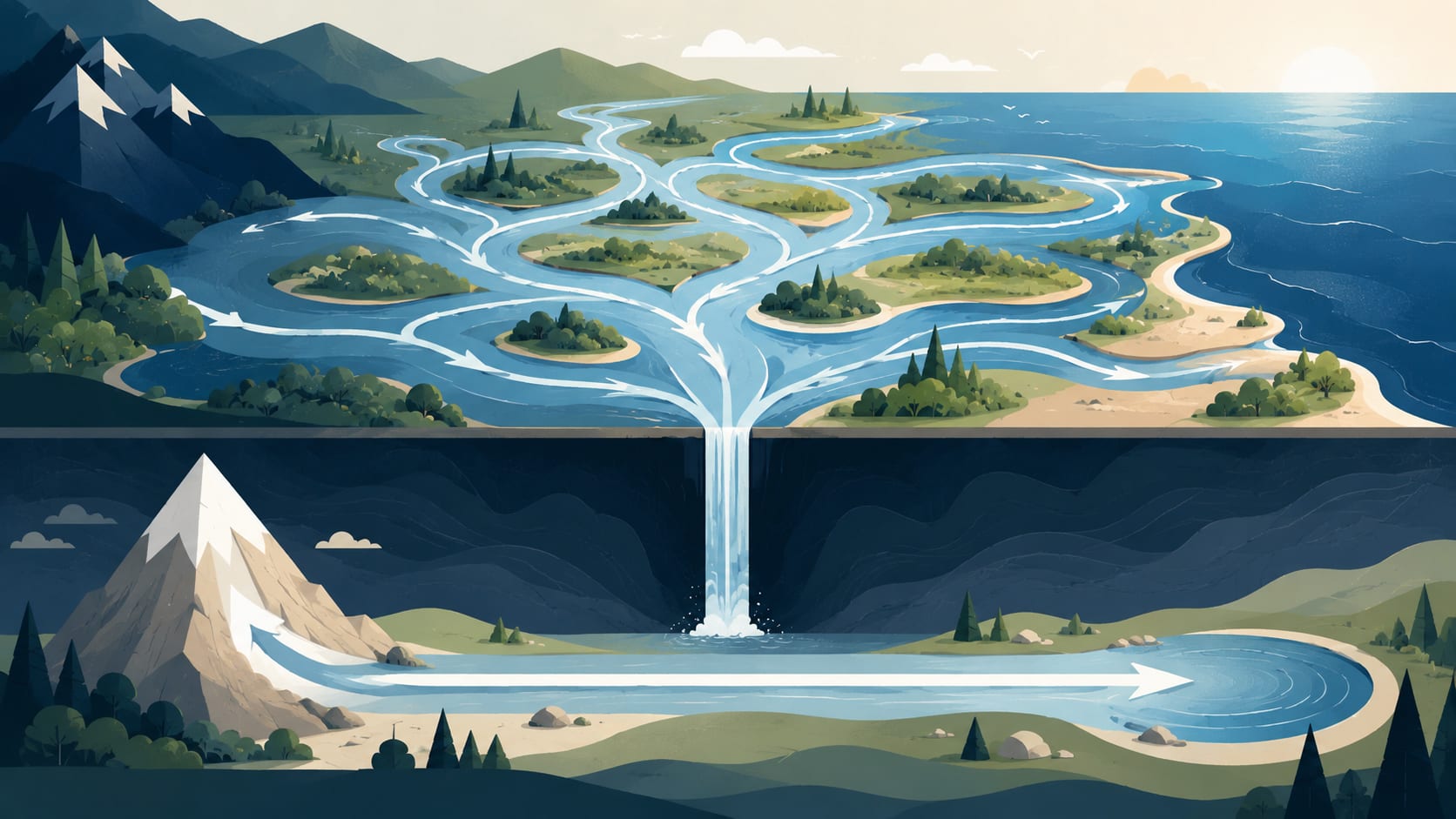
The best writers move between formats fluidly. They write short stories to sharpen their precision. They write novels to explore depth. They recognize that some ideas are sparks—bright, brief, unforgettable—and others are fires—slow, warm, transformative. Neither is better. They serve different purposes.
Your job is not to chase word counts. Your job is to listen to your idea and give it the container it needs. If that container is 2,000 words, pour it into a short story and make every sentence sing. If that container is 90,000 words, pour it into a novel and let it breathe. The story always knows what it wants to be. The writer's job is to get out of the way and let it happen.
If you are ready to start writing, ReadNovax has guides to help you take the next step—whether that means drafting your first short story this weekend or planning the novel you have been carrying for years. The format is just the beginning. The story is what matters.